
Furnace replacement in Chicago's western suburbs
The short answer
Furnace replacement in Chicago's western suburbs runs $5,000–$9,000 installed: about $5,000–$7,000 for a standard 80% AFUE furnace and $6,300–$9,000 for a 95%+ high-efficiency unit with new PVC venting. Most standard swaps take one day. Replace instead of repairing when a repair costs more than half of a new furnace, or when the furnace's age times the repair cost tops $5,000.
Written by Jenna Fortman, Owner of FortHouse Heating & Cooling. Installed by EPA 608 and NATE-certified technicians.
How much does it cost to replace a furnace?
| Option | AFUE | Installed price | Venting and scope |
|---|---|---|---|
| Standard-efficiency | 80% | $5,000–$7,000 | Straightforward swap, no new venting required. |
| High-efficiency | 95%+ | $6,300–$9,000 | Includes the new PVC venting a 95%+ furnace requires. |
| Ductwork modifications | — | +$800–$2,500 | If existing ducts can't move the air a bigger or higher-efficiency unit produces. |
Real ranges, not a quote — the exact number depends on your ductwork, venting, and efficiency tier.
When should you replace a furnace instead of repairing it?
The 50% rule is the actual industry shorthand. If a repair costs more than half of what a new furnace would run, or the furnace's age times the repair cost tops $5,000, replacement usually wins on value.
Repair is likely right when
- Repair estimate is under $600 and the furnace is younger than 15 years.
- This is the furnace's first repair this heating season.
- AFUE is 80% or higher and the gas bill hasn't climbed.
Replacement usually wins when
- A cracked heat exchanger — replaced, not repaired, full stop.
- A second repair in one heating season.
- AFUE below 80%, or the furnace is past 15 years old.
- Repair cost is already more than half of a new furnace's price.
What happens on furnace installation day?
Before install day
Sizing visit
A Manual J load calculation and a check of the existing ductwork, so the new furnace fits the house instead of copying the old unit's size.
Written quote
Efficiency tier, venting, and any duct work, priced in writing before any work starts.
Permit, where required
Filed with city or village hall where your town requires one, or with the county for unincorporated addresses. Naperville and Plainfield don't require one for a like-for-like swap.
Install day
Old furnace out
Removed and disposed of. Removal is in the installed price, not a separate add-on.
Venting and connections
New PVC venting if you're moving to a high-efficiency furnace, the step that occasionally adds a second day. Then the gas line and electrical.
Startup and combustion analysis
Measured readings confirming the new furnace burns clean before we leave.
After
Permit inspection
We don't call the job done until the inspection is signed off.
What does a finished FortHouse furnace install look like?
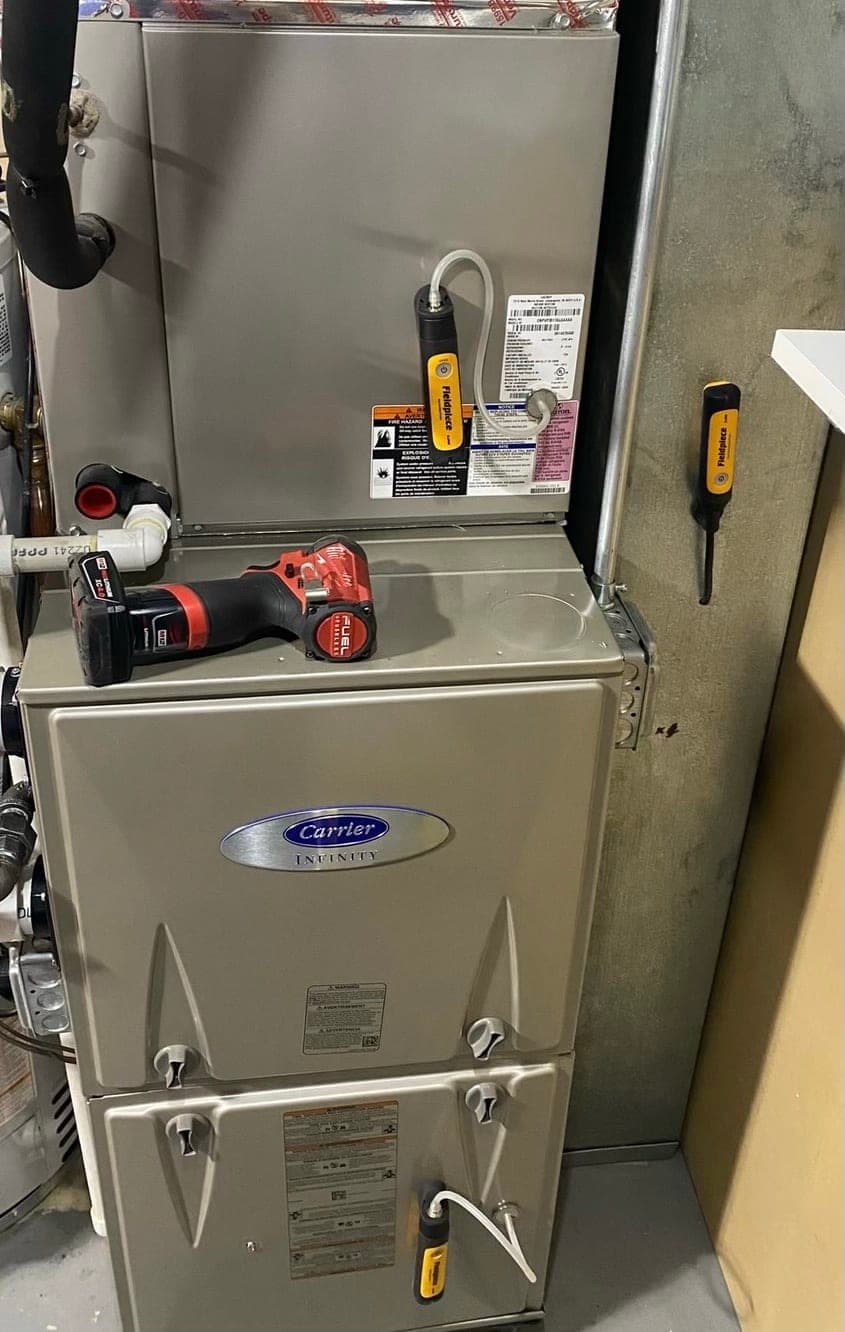
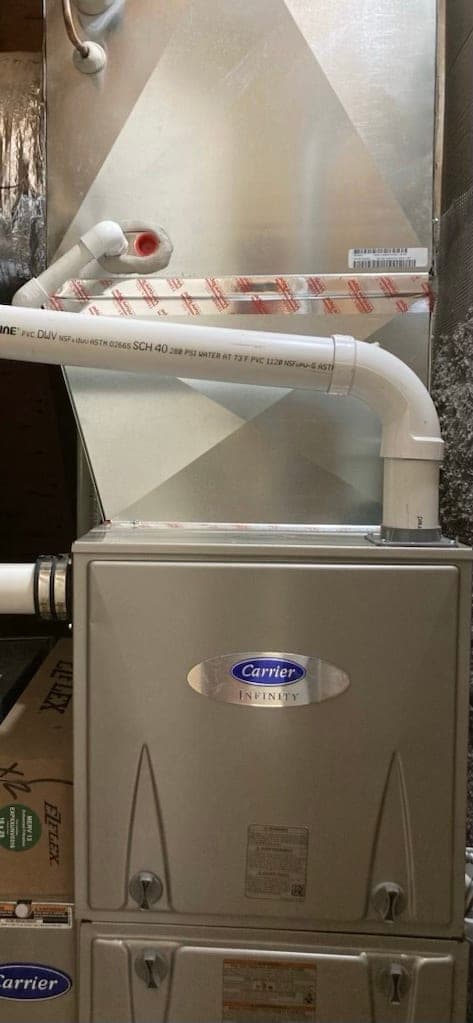
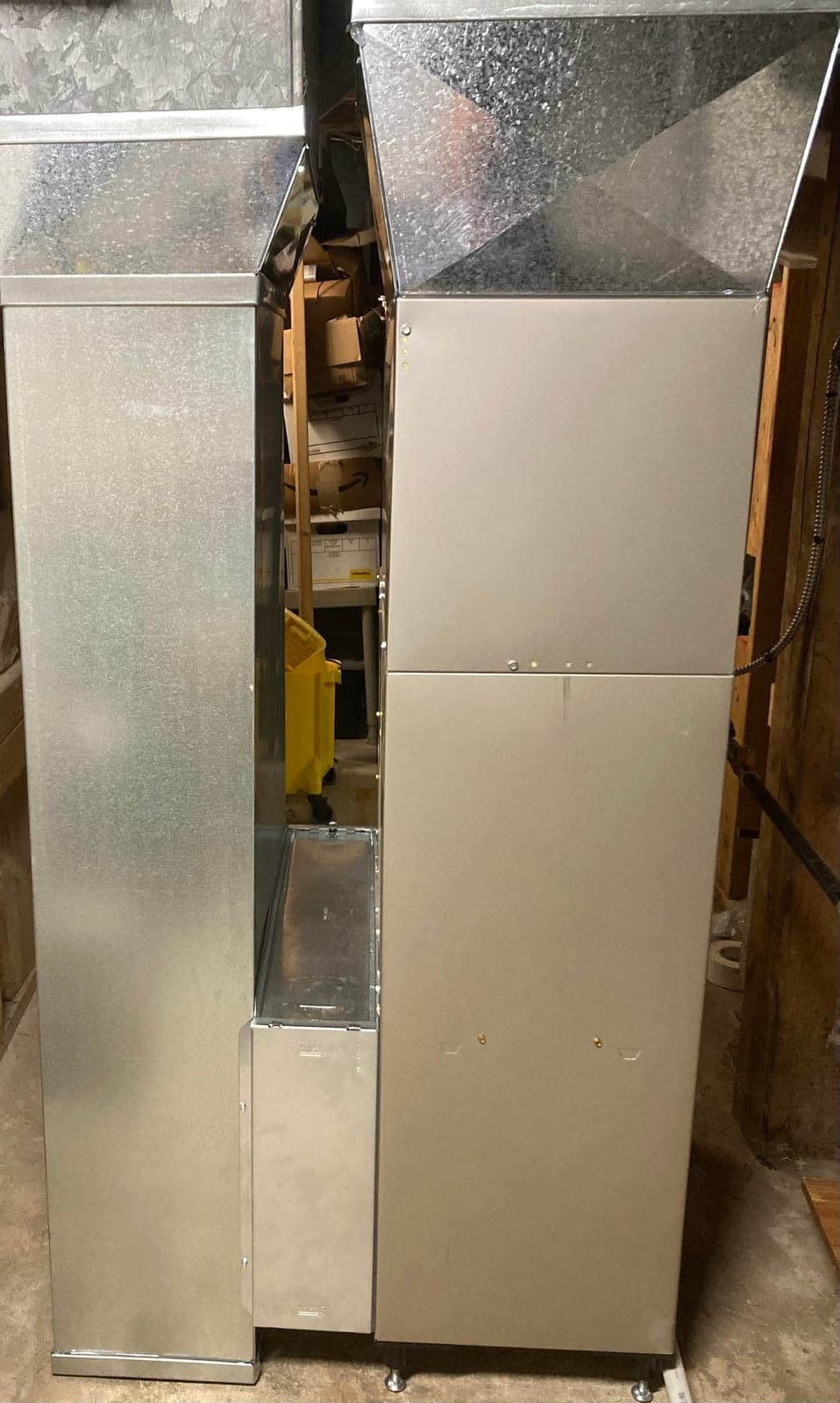
Why is furnace replacement different in the western suburbs?
City and village permits
Most cities and villages in Chicago's western suburbs require a permit for furnace replacement, filed with city or village hall; unincorporated addresses go through the county. Naperville and Plainfield are the exceptions: a like-for-like swap there doesn't need one. We file the permit and schedule the inspection whenever the job requires it.
Built for 80% furnaces
A lot of homes out here were originally ducted for an 80% furnace. Moving to a 95% unit often means duct changes before the new furnace can move air well, which is why we check the existing ductwork before the furnace is chosen.
Is furnace installation the same job as furnace replacement?
"Furnace installation" and "furnace replacement" describe the same job in almost every home: a new furnace installed in place of the one that's failing or worn out, not a new-construction install into a house that never had one. This page covers the complete installation — sizing, old-unit removal, venting, permit filing, and startup — whichever term you're searching.
What are the signs a furnace needs replacing, not another repair?
A few things push the decision toward replacement even before a repair estimate is written:
- A cracked heat exchanger — the one furnace failure that can put carbon monoxide into the air, and it gets replaced, not repaired, full stop.
- A second repair in one heating season — not because the second repair is expensive, but because a furnace failing twice a season is telling you something the first fix didn't address.
- AFUE below 80% — furnaces built before the mid-2000s often run 60–70% efficient; a modern 95%+ AFUE furnace can cut the gas portion of a heating bill by a third.
- The furnace is past 15 years old and the current repair costs more than roughly half of what a new furnace would run.
- A gas bill that's climbed with no change in weather or thermostat schedule — usually a furnace losing efficiency as it ages, not a rate hike.
What should a furnace replacement quote include?
A Manual J load calculation and a check of the existing ductwork, so the new furnace is matched to your house, not just your old unit's tonnage — the same oversizing mistake that causes short cycling and wears out a furnace early. Venting and combustion air brought to code, not just bolted to whatever was already there. Permit filing and inspection wherever your town requires one, which most cities and villages in the Chicago western suburbs do. A post-install combustion analysis confirming the new unit is actually burning clean before we leave.
What's included in the installed price?
Old furnace removal and disposal, and permit filing, should already be in an installed price — if either shows up as a separate add-on, ask why.
If financing that price is part of the plan, understand the difference between true 0% financing and deferred interest before signing anything — the two are advertised identically but cost very differently if a balance is left over at the deadline.
Should you choose a standard or high-efficiency furnace?
A 95%+ AFUE furnace costs more upfront for one structural reason: it needs sealed PVC intake/exhaust venting instead of a metal flue, since the exhaust gas runs cool enough not to need one — that venting change is most of the price gap. It's usually worth it if you're staying in the house more than five years and your gas bills already sting in January; it's a harder case if you're replacing a 12-year-old 90%-efficiency furnace that's still running fine, since the payback period on the last five points of efficiency stretches out fast. The other high-efficiency path is a dual-fuel setup — a heat pump handles most of the season, and the furnace kicks in only on the coldest nights.
When is repair still the right answer?
This page exists for the replacement side of that math, not to talk anyone out of a repair that's still the right answer — if the furnace is closer to a $150–$600 repair and under 15 years old, a furnace repair visit is very likely the better call. See the repair-or-replace breakdown above for the specific signals either way.
What should you check before booking a furnace replacement company?
A few real questions separate a company solving your problem from one selling a furnace:
- Do they run a Manual J, or just match your old unit's tonnage? Matching the old size just recreates whatever short-cycling or undersizing problem the old furnace had.
- Is the repair-or-replace math explained, or skipped straight to a quote? A company that doesn't ask about your current furnace's age and repair history is selling a furnace, not solving your problem.
- Are they licensed to pull permits in your specific town? Most cities and villages require one for furnace replacement, and a company still learning your town's rules on your job is a real risk.
- Who actually owns the company? We're family-owned, not backed by private equity — it changes whether the incentive is sizing the furnace correctly or hitting a sales number.
Where does FortHouse replace furnaces?
Across Plainfield, Naperville, Aurora, and the rest of Chicago's western suburbs. Cities with their own furnace page cover local permits and housing stock in more detail.
- Furnace replacement in Plainfield, IL
- Furnace replacement in Naperville, IL
- Furnace replacement in Aurora, IL
Also serving Yorkville, Bolingbrook, Oswego, Wheaton, Lisle, Minooka, and Shorewood.
Furnace replacement questions
How much does furnace replacement cost?
Most straightforward swaps run $5,000–$7,000 for a standard-efficiency furnace, or $6,300–$9,000 for high-efficiency with new venting. Ductwork modifications, if needed, add $800–$2,500 separately. Every quote is written and based on a walkthrough of your specific system.
Should I repair or replace my furnace?
Run the 50% rule: if a repair costs more than half of what a new furnace would, or the furnace's age times the repair cost tops $5,000, replacement wins on value. A cracked heat exchanger, a second repair in one season, or AFUE under 80% all push the decision toward replacement even when the math is close.
How long does it take to replace a furnace?
One day for a standard swap in most cases. Add a half to full day if you're switching to a high-efficiency furnace that needs new PVC venting, or if ductwork needs modification for the new unit's airflow.
How long does a furnace last?
15 to 20 years with annual maintenance. ENERGY STAR recommends a professional evaluation once a furnace passes 15 years. Oversizing and skipped tune-ups are the two things that most often cut that short, because both make the furnace start and stop more than it should.
Should I replace a 20-year-old furnace?
Usually, once it needs a real repair. At 20 years, the age-times-repair-cost rule tips to replacement at any repair over $250, since 20 × $250 = $5,000. Check its AFUE too: under 80% is a reason to replace on its own. If it's still running fine and passes a combustion check, there's no rule that says it has to come out today.
Is a permit required to replace a furnace?
In most cities and villages in the Chicago western suburbs, yes: the permit comes from city or village hall, or from the county for unincorporated addresses. Naperville and Plainfield don't require one for a like-for-like swap. When the job needs one, we file it and schedule the inspection as part of the job.
Is a high-efficiency furnace worth the extra cost?
Usually, if you're staying in the house more than five years and current gas bills already run high — the payback period is faster than people expect once the venting cost is the only real premium. It's a harder case if you're replacing a furnace that's already 90%+ efficient and still running fine.
What areas do you cover for furnace replacement?
Plainfield, Naperville, Oswego, Yorkville, Bolingbrook, Wheaton, Lisle, Minooka, Shorewood, and Aurora, plus the rest of Chicago's western suburbs. If you're just outside that list, call anyway — we make exceptions for a reasonable drive.
Why do furnace replacement quotes vary so much between companies?
Mostly efficiency tier and ductwork, not padding — a standard 80% AFUE swap runs $5,000–$7,000, high-efficiency 95%+ with new PVC venting runs $6,300–$9,000, and ductwork modifications add $800–$2,500 separately if your existing ducts can't move the new unit's airflow. Two quotes that differ by thousands are usually pricing different equipment tiers, not the same job at different markups — ask what AFUE and venting each number assumes before comparing them directly.
Sources
Prices are FortHouse's own published installed ranges, last updated September 26, 2026. Your written quote follows a home visit, not a phone call.